Monday, July 31, 2006

Decision making and Risk taking


Often in life, we reach decision points where we need to make a choice between 2 potentially life-altering options. Other times, we may spot an opportunity of sorts upon the horizon. These situations normally come packed with the relevant risks and given the same scenario, its very likely that different folks would approach it in different manners. However, one thing that I’ve noticed is that few actually leave the beaten track. And that’s a pity in some sense.

Personally, when it comes to making big decisions, I apply 2 different philosophies or mindsets to tackle the choice. These somewhat defines the amount of risk I can take.

Philosophy #1: “Would I look back and wonder?”
When facing a big decision on the horizon, the first thing I normally do is to try to figure out where each may lead to. Normally, there are only 3 outcomes – Life as usual, having taken the plunge and succeeding or taking the plunge and failing.

Most people tend to apply the cost-benefit analysis to the equation and feel that the returns for something do not justify the cost. Maybe they are right? Or maybe their minds just rationalized their risk-adverse nature into ballooning the risks far beyond what they actually are. What I do is just ask a question “If I don’t take this opportunity now, would I be looking back on this day and ten years later and imagine what it may have led to?” Though slightly clichéd, its rationale is clear when you look back on choices you have made previously and wonder if those paths you didn’t take could have led you to somewhere better.

And you know what? If you jumped on all opportunities, you’ve probably gotten the answer to that in the near future so you wouldn’t be wondering later. This is kind of akin to the motto that if you try something and fail, at least you learn what doesn’t work.

Philosophy #2: “Does it still seem like a good idea in the morning?”
Sometimes, an idea or opportunity looks so irresistibly good that you feel that you need to grab it right there on the spot. But as they always say, haste makes waste so caveat ‘opportunist’. Normally, you get sometime to make decisions so another way I measure if I should go for something is to sleep on it and if it still feels like a good idea in the morning, I’ll probably take it up. There is a warning though, not to drag things out for too long although you may have say, a week or a month to make the final call. This is because situations may change and more thought on the matter may make you more hesitant about the final go or no-go choice.

For me, this is a good way to keep crazy ideas under check also. This is especially true for those who face blinding spur of the moment optimism.


So there you have it, 2 angles I take on risk taking. May have a personal hue to it so take from it what you may.

Just a final quotation which I thought fits the theme of what I was trying to express:


“Two roads diverged in the road and I,
I took the one less travelled by,
And that has made all the difference.”
- Robert Frost


(PS: Here a related article from Bjorn :CrossRoads of Life — Do People Die There? )

Saturday, July 29, 2006

Top 100 World Brands and why I think they are there.


Great, this year's Interbrand rankings for the 100 most valuable brand names are out here.

Branding has always been something of an interest for me because it is the art of how companies shape themselves in the eyes of their consumers. An important skill for a firm to have in both good times and bad.

Not surprisingly, the top of the board are ruled by huge multi-nationals whom have spend decades on bringing their brand name and values around the globe. I'm pretty sure that many of those top contenders such as Coca-cola and Nokia have spend a substantial amount of advertising dollars into both the traditional media as well as experimenting with new avenues that the Internet offers.

Top mover (in terms of percentage increase) on the list is Internet Behemoth - Google (46%). With its rapidly expanding range of products and services coupled its strong business fundamentals in such a volatile industry, its brand value has managed to outpace its closest competitor, Yahoo (15%) , by almost 3 times. Also notable is eBay's 18% increase in brand value, notching it 7 steps higher this year. These are the only 3 Internet Firms on this list and I'm would think that the nature of their business would allow them to increase brand value fairly rapidly over the foreseeable future.

Amongst the top ten, its interesting to see that only non-US companies, Nokia (#6) and Toyota (#7) , have seen double-digit brand value increases of 14% and 12% respectively. Perhaps this could be attributed to the fact that both companies are driving hard into project their brands into the emerging markets of Asia while developing their interests in North America at the same time. Nokia's strength may derive from its aggressive expansion in the Asia markets, most notably China. Toyota may also be doing well in the States as more consumers are ditching their SUVs other gas guzzlers in favour of the more efficient Japanese Automobiles in the face of rising gas prices.

Its going to be interesting to see how these movers and shakers will be evolving to capture more brand value and mind share this year.

Top 100 Global Brands List [via : Digg ]

Sunday, July 23, 2006

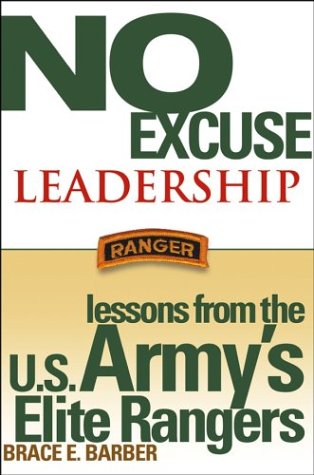
No Excuse Leadership


This is one of the finest leadership books I've ever read. It charts the lessons and development of 10 Army Rangers and how some of them have brought the lessons and principles learnt from Ranger School into the corporate world.

The title's namesake comes from a speech a Ranger Colonel gave which inspired the author to sign up for Ranger School. Here's a short excerpt:
For a second I felt it was just Colonel Turner and myself in the room, and he was looking right at me from two feet away. "Well, cadet, what's it gonna be? Ranger -- or EXCUSE?"

Grasp the simplicity and power of No Excuses, and you have guaranteed success.


"Well, what's it gonna be? Wealthy -- or excuse?"

"Well, what's it gonna be? Healthy -- or excuse?"
"Well, what's it gonna be? A good parent -- or excuse?"

"Well, what's it gonna be? A good friend -- or excuse?"
"Well, what's it gonna be? A good employee -- or excuse?"
"Well, what's it gonna be? A good leader -- or excuse?"

If you set goals in line with your personal priorities, and never accept excuses for failure, you will succeed.

Not done with the whole book yet but even halfway through, I strongly recommend this as a good read on not just leadership, but many other of life's important principles.

[No Excuse Leadership]

Saturday, July 22, 2006

Preparation and Teamwork - A Gunfight Analogy

Doing something without preparation is like going to a gunfight with a knife.

Doing something with preparation would be bringing the right gun to the gunfight. But it still doesn't mean you'll win.

Now, if you can add in the right dosage of good teamwork, it would be going to that same gunfight with four friends and a tank.

Friday, July 21, 2006

Learning Leadership ?

Leadership is a pretty over-rated topic at times but had a couple of thoughts about how to go about developing what I would term "leadership on a personal level". This, I feel, is the foundation to being able to develop further in this area. Just a couple of thoughts on what I apply myself:

  1. Learn about yourself - This is essentially the most basic yet hard to achieve element. You may scoff and say "Of course I know all about me!" but perhaps not at a deeper level. Knowing enough about yourself includes knowing your weaknesses and when they appear. For example, you may discover that you tend to become subconciously disorganised when nervous or under stress. Or that when interacting with people in stressful situations, you tend to stutter. Being mindful of all these facts will help you to acknowledge these personal weaknesses. That was the hard part, the next step is simply to find logical ways to keep your spirits and confidence
  2. Learn about the people around you- Learn and understand the strength and weakness of people around you. Its similar to the first point and would help you to be mindful about how to project yourself positively. In teams especially, understanding how each member interacts is crucial. The key and most difficult aspect to this is to be objective and seek to understand everyone as much as possible. At the same time, learning about how people around you work gives tons of opportunities for self-reflection and correction - pick up the best attributes from people and be mindful to avoid negative ones you spot.
  3. Learn from the best - This can be from mentor figures you may have or just plainly by reading up on the topic from books. Watching great leaders in action bring the double benefit of live learning coupled with a constant inspiration to excel. In terms of reading up, I've found that the best leadership books are the military-themed ones. My logic behind it is that in the military, successes and failures are much better documented and examined because they are matters of life and death. Being able to analyse a military failure, the military force hopes to avoid such a reccurrence. For companies and organisations, this is seldom the case as success stories tend to be played up while failure ones are toned down.