I guess no one can deny that information equates to power. But its no longer about just possessing it that gives one an edge anymore. It is important to note what has shifted and how to cope with this new information age when thought and ideas literally travel at the speed of light. Here are 5 ways in which the way we interact with information has changed (from the perspective of a layperson like me) :
- Having versus Finding information - In the good ol' days before the Internet was born, information was mostly written down in black and white. So, the amount of information one had access was only roughly the summation of one's memory and perhaps the amount of reading material one had access too. Simply put, the genius staying near a library was king then. Now, internet has opened the doors to the masses with its seemingly infinite collection of literature and data. Nearly everyone with an internet connection has equal access to this massive pool of collective knowledge. The shift then becomes that it will be the folks who benefit the most will be those who know how to find what they need, and fast. This is not to say that the ability to find information was not important in the past; it was, but it has become crucial now. And given the diversity of accumulated knowledge out there, knowing how to find information will beat having information any day.
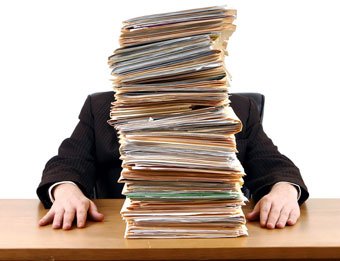
- Too little versus Too much information - And with the massive flood of digital information we are now subjected to, the problem we face with information quantity wise is no longer having too little of it, but too much of it. Same information can be presented in different formats these days - text, audio or video. It has taken on more mediums and similarly, begins to confuse us even more. Whereas previously, what every precious bits of information was absorbed and thought about, we have been so swarmed with data these days that we barely give a cursory glance when we reproduce it somewhere else for one reason or another. Most of the time, this adds up to more confusion which negates the benefits we reap from being able to gather data faster.
- Relevant versus Irrelevant information - Major bane of academics, statisticians and the ike where the ruling thought is "more is better" Sadly, more is typically less. It confuses, it misleads and it causes us to miss important facts and patterns. This I believe is nurtured in education where plunking down a 10 pages paper seem to net more than a succinct 2 pager. Chances are that it was because it just have confused the heck out of the grader. May work in school but this habit is deadly in business, where getting muddled in useless information is like sinking in quicksand. Messy and deadly in both cases. This is why the skill to present not only relevant data but also the relevant trends is important. The art making tons of complex data into meaninful trends is known as data visualisation which I think is only going to become an increasingly important skill to have.
- Accurate versus Inaccurate information - And given the large swarms of data out there, the flipside is naturally that some of it is just, well, incorrect. With the dawn of the internet age, there has never been a better time to be more curious and skeptical. Like when I said I have a list of 5 when there's only going to be 4 points? How many folks would have just read my blurb and assumed there would be 5? And with the way information can be easily duplicated in the digital form, it would be just as easy for wrong data to appear in different places, making it seem credible. Stay critical and observant to avoid this issue.
And so, that's how I see the way information works has changed.
So if you want to be a "knowledge worker", better understand these trends well then!
(PS: Finally I get to use the words "shift" and "paradigm" together in a post title. Boy, do I feel like a Management Consultant with a MBA.)